How to Start Beekeeping: The Complete Step-by-Step Guide for Absolute Beginners (2026)
You're standing in your backyard, watching bees buzz around your neighbor's flowers, and thinking: "I want to do that."
But where do you even start? What equipment do you need? How much does it cost? Can you really keep bees in your backyard? And most importantly: Will you accidentally kill thousands of bees because you have no idea what you're doing?
Take a deep breath. I've helped over 5,000 people start their beekeeping journey in our community at Modern Beekeeping, and I promise you: beekeeping for beginners is absolutely doable. This guide will walk you through every single step—no fluff, no confusing jargon, just the exact roadmap I wish I had when I started.
Step 1: Before You Buy Anything—Answer These 5 Critical Questions
Most beginners make the mistake of buying equipment first, then realizing beekeeping isn't what they expected. Do this homework before you spend a single dollar.
Question 1: Is Beekeeping Legal Where You Live?
Check your local zoning laws, HOA rules, and city ordinances. Most places allow backyard beekeeping, but some require:
- Minimum distance from property lines (often 10-25 feet)
- Notification to neighbors
- Registration with local agriculture department
- Water source for bees (they need water year-round)
Pro tip: Search "[your city] beekeeping ordinance" or call your local county extension office. They'll tell you exactly what's allowed.
Question 2: Do You Have Enough Space?
You need less space than you think. A single hive fits in a 4x4 foot area. Urban beekeepers successfully keep hives on apartment balconies, flat roofs, and tiny backyards.
What matters more than space:
- Flight path: Hive entrance should face away from high-traffic areas
- Morning sun: Bees wake up faster with east-facing hives
- Wind protection: Avoid exposed, windy locations
- Level ground: Hives need to be perfectly level (use concrete blocks)
Question 3: Are You Allergic to Bee Stings?
If you've never been stung, get tested before buying bees. About 3% of adults have severe allergic reactions (anaphylaxis) to bee venom. If you're allergic, beekeeping might not be safe.
Even without allergies, expect 5-10 stings per season as a beginner. It's part of learning. The good news? Most beekeepers develop immunity over time, and stings hurt less after a year.
Question 4: Can You Commit 20-30 Hours Per Year?
Beekeeping isn't a "set it and forget it" hobby. Here's the realistic time breakdown:
- Weekly inspections (spring/summer): 30-45 min per hive
- Honey harvesting: 2-4 hours per hive
- Fall prep/winter checks: 1-2 hours per month
- Varroa treatment: 30 min, 2-3 times per year
Total: About 20-30 hours per year for one hive. If you travel frequently or work 80-hour weeks, wait until your schedule stabilizes.
Question 5: What's Your "Why"?
This sounds cheesy, but it matters. Why do you want bees?
- "I want honey" → Great! But know you won't harvest in year one (bees need that honey to survive winter)
- "I want to help the environment" → Awesome! Honeybees pollinate 80% of flowering plants
- "It sounds cool" → Valid! But beekeeping has frustrating days too (swarming, robbing, colony loss)
- "I want a meditative hobby" → Perfect fit. Watching bees is genuinely calming
Your "why" will keep you going when your first hive swarms in May or when varroa mites crash your colony in October.
Step 2: Essential Beekeeping Equipment (What You Actually Need)

Here's the truth: beekeeping suppliers want to sell you $1,500 worth of gear. You need about $300-$500 to start.
The Hive (Your Most Important Purchase)
Langstroth Hive: $150-$250
This is the standard. You need:
- Bottom board (the floor)
- 2 deep brood boxes (where bees live and raise babies)
- 20 deep frames with foundation
- Inner cover
- Outer cover (roof)
Beginner mistake: Don't buy honey supers yet. You won't harvest honey in year one. Add them in year two when your colony is established.
Protective Gear
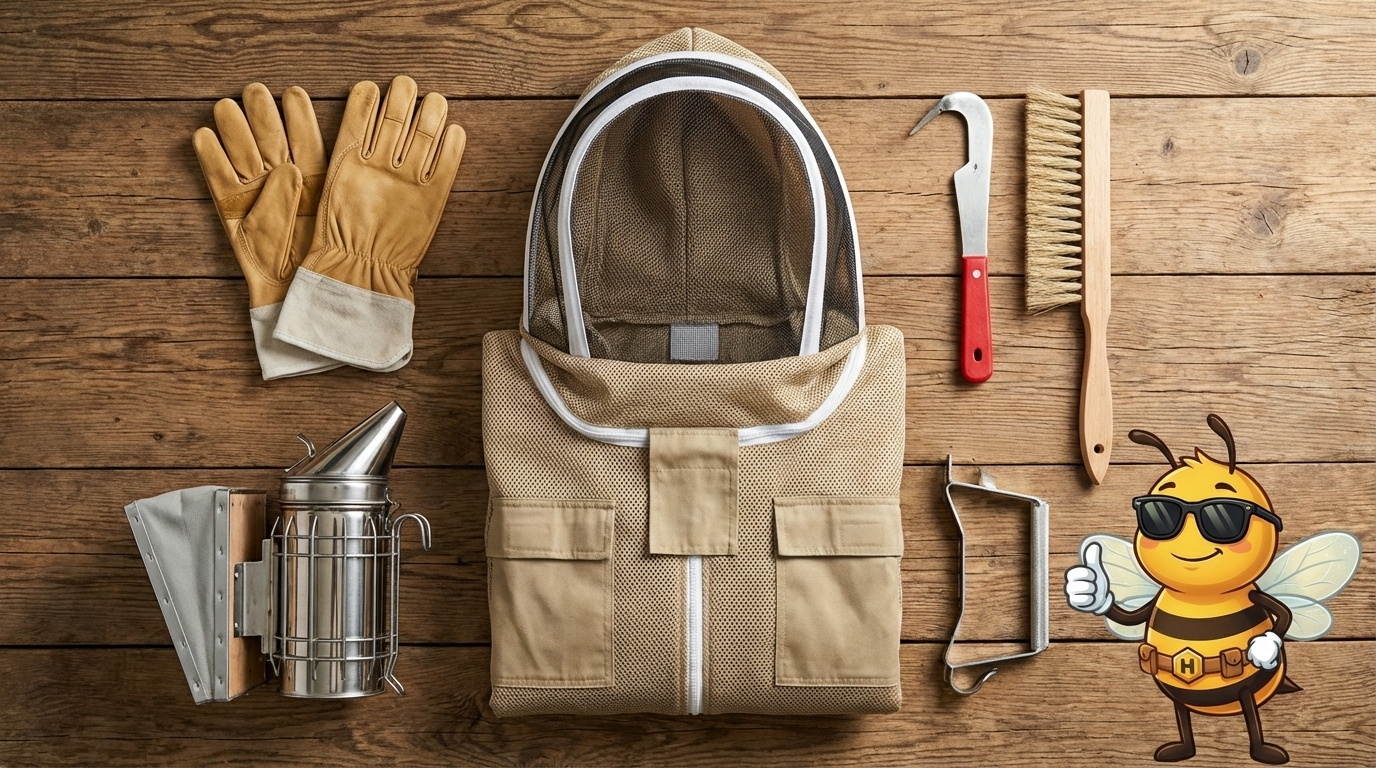
- Full bee suit with veil: $50-$100 (get a ventilated suit if you live in hot climates)
- Leather gloves: $15-$30 (nitrile gloves work too but tear easily)
- Boots: You already own these (any tall boots, tuck pants into socks)
Tools
- Hive tool: $8-$15 (J-hook style is most versatile)
- Smoker: $25-$40 (stainless steel lasts forever)
- Bee brush: $8-$12 (for gently moving bees off frames)
- Frame grip (optional): $10 (makes pulling frames easier)
The Bees
- Package of bees (3 lbs + queen): $150-$200
- Nucleus colony (nuc): $200-$300 → Better for beginners (already established)
Order bees in January-February for April-May delivery. Local bee suppliers sell out fast.
Total Startup Cost Breakdown
- Hive: $200
- Protective gear: $80
- Tools: $60
- Bees: $180
- Total: $520
Step 3: Your First-Year Beekeeping Timeline
Beekeeping is seasonal. Here's what happens month by month:
January-February: Preparation Phase
- Order bees from local supplier
- Buy and assemble hive equipment
- Join a local beekeeping club or online community
- Read 1-2 beginner books (recommended: "The Beekeeper's Handbook")
March-April: Installation

- Pick up your package or nuc
- Install bees into hive (late afternoon works best)
- Feed 1:1 sugar syrup for first 2-3 weeks (they need energy to build comb)
- First inspection after 5-7 days (check if queen is laying)
May-July: Growth & Learning

- Weekly inspections (looking for eggs, larvae, capped brood)
- Add second brood box when 7-8 frames are covered with bees
- Watch for swarming behavior (overcrowding, queen cells)
- Stop feeding once nectar flow starts (flowers blooming)
August-September: Varroa Treatment
- Test for varroa mites (alcohol wash or sugar shake)
- Treat if mite count is high (Apivar, MAQS, or formic acid)
- Feed 2:1 sugar syrup to help bees build winter stores
October-December: Winterization
- Reduce hive entrance (mouse guard)
- Add insulation if in cold climate (foam board on top)
- Stop inspections (don't open hive below 50°F)
- Do "heft test" monthly (lift back of hive to check weight)
Step 4: Avoid These 7 Deadly Beginner Mistakes
- Opening the hive too often. Weekly inspections are enough. Over-inspecting stresses bees and can cause them to abscond.
- Not treating for varroa mites. This is the #1 killer of colonies. Test in August, treat if needed. No exceptions.
- Harvesting honey in year one. Bees need 60-80 lbs of honey to survive winter. Let them keep it all the first year.
- Not joining a community. Beekeeping is 10x easier with mentors. Join a local club or online group.
- Buying bees too late. Order by February. Late-season packages struggle to build up before winter.
- Ignoring local beekeeping laws. Getting shut down by code enforcement after buying everything? Heartbreaking.
- Quitting after losing your first colony. 30-40% of first-year colonies don't survive. It happens. Learn from it and try again.
Ready to Start Your Beekeeping Journey?
Join our free community of 5,000+ beekeepers at Modern Beekeeping. Get step-by-step courses, weekly Q&A sessions, and mentorship from experienced beekeepers who remember exactly what it's like to be a nervous beginner.
Related Articles:
- Flow Hive Review 2026: Is It Worth It? [blocked]
- Beekeeping Equipment Checklist for First-Year Beekeepers [blocked]
- How Many Hives Should a Beginner Start With? [blocked]